Saturday, March 29, 2025
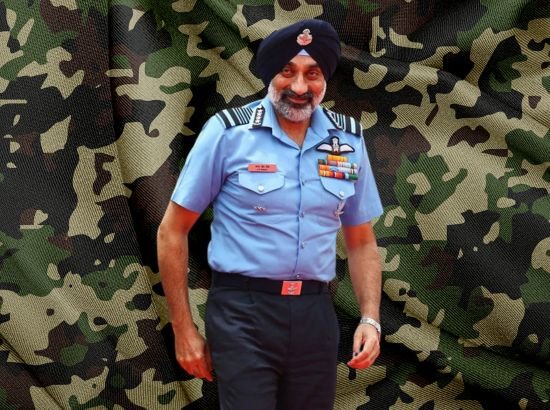
Why Was Operation Sindoor Halted So Quickly? IAF Chief Explains the Cost Factor
New Delhi, September 20, 2025 – Indian Air Force Chief, Air Chief Marshal A.P. Singh, has revealed why Operation Sindoor was called off after just four days. Speaking at a public event on Friday, Singh explained that the operation achieved its objectives swiftly, and prolonging it would have come at a steep price.
The offensive was launched in response to the terrorist attack on tourists in Pahalgam, Jammu and Kashmir, which killed 26 civilians. Within four days, the Indian armed forces destroyed nine major terrorist strongholds inside Pakistan and Pakistan-occupied Kashmir (PoK), including the Jaish-e-Mohammed headquarters in Bahawalpur and the Lashkar-e-Taiba base in Muridke.
“Our goal was counter-terrorism. We executed precise strikes, eliminated key bases, and once our objectives were met, there was no reason to prolong the conflict,” Singh said. “Every war has a price. It affects future preparedness, the economy, and national progress.”
The Air Chief Marshal emphasized that the military was given full operational freedom, with no restrictions from political leadership. He highlighted that during the May 7–10 confrontation with Pakistan, the IAF showcased air superiority, with the S-400 missile system proving to be a game changer, surprising Pakistan with its range and effectiveness.
According to Singh, Pakistan suffered extensive damage to its military facilities, radars, command centers, hangars, and aircraft. Displaying graphic evidence, he underlined the effectiveness of Indian strikes, countering skeptics who had once questioned the impact of the 2019 Balakot airstrikes.
Rejecting arguments that India should have continued the military campaign, Singh noted: “Yes, Pakistan retreated, but our objective was fighting terrorism. We struck them, we succeeded—so why prolong the conflict? Every battle carries immense costs. Continuing could have compromised our readiness for future operations, hurt the economy, and slowed national development.”
Drawing comparisons with ongoing wars such as Russia-Ukraine and the Middle East conflicts, Singh said these drag on because nations lose sight of their initial objectives. “Goals shift, egos get in the way. This is where the world should learn from India—how to begin a conflict and end it swiftly.”