Saturday, March 29, 2025
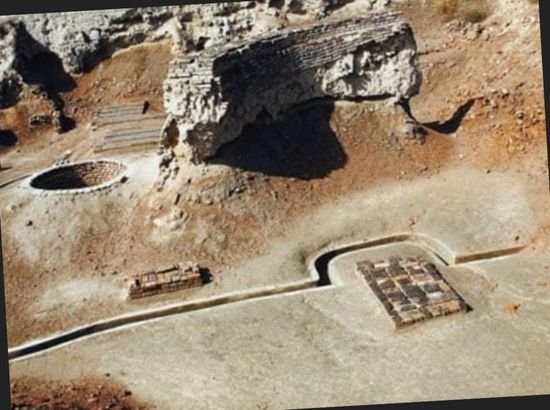
One of the greatest mysteries of Indian and world history has been the disappearance of the Indus Valley Civilization—one of the earliest and most advanced urban cultures known to humankind. Now, new research from IIT Gandhinagar suggests that the decline of cities like Harappa, Mohenjo-daro, Rakhigarhi, and Lothal was not sudden, but the result of a long period of severe and repeated droughts that gradually crippled the civilization.
The Indus Valley Civilization (also called the Harappan or Indus–Saraswati Civilization) thrived between 5000 and 3500 years ago in present-day northwest India and Pakistan.
It was known for:
advanced drainage and sewage systems
well-planned urban architecture
metallurgy and craftsmanship (like the famous Dancing Girl statue)
extensive trade networks
sophisticated water management
However, around 1900 BCE, the civilization began to decline—a mystery that has puzzled historians for over a century.
In a study published in Communications Earth & Environment, Professor Vimal Mishra and his team analyzed high-resolution climate models and geological evidence such as cave deposits and lake sediments.
Their key findings:
During the civilization’s peak, monsoon rainfall gradually decreased, reducing water availability.
This made existing water stress even worse.
Each drought lasted more than 85 years, with the longest lasting 164 years, affecting 91% of the civilization’s area.
These long droughts severely disrupted agriculture, food supply, and the social systems that supported urban life.
Early Harappan settlements were built in regions with abundant rainfall.
As drought intensified, populations shifted closer to the Indus River in search of water.
Farmers switched from water-intensive crops like wheat and barley to millets, which are drought-resistant.
Even this adaptation could not withstand centuries-long drought cycles.
Eventually, large cities were abandoned as people scattered into smaller rural communities.
The study also highlights major climate drivers:
El Niño events weakened the Indian monsoon.
Cooling in the North Atlantic affected global wind patterns.
Warming in the Pacific and Indian Oceans reduced the land-sea temperature contrast that powers monsoons.
The combined effect led to a weaker monsoon system and long-term water scarcity.
Earlier theories suggested an abrupt end, possibly due to invasion or floods.
However, the new research indicates a slow, multi-century decline driven by:
repeated climate stress
agricultural collapse
migration into smaller settlements
breakdown of large urban systems
The study highlights an important message:
Even advanced civilizations can collapse when climate stress exceeds their capacity to adapt.
In today’s world—facing global warming, changing monsoons, and water scarcity—the story of the Indus Valley Civilization serves as a powerful reminder of the importance of:
sustainable water management
climate adaptation
resilient agricultural systems
Despite the decline, researchers note that modern global warming may increase rainfall over the Indian subcontinent, which could bring some relief—though challenges remain.