Saturday, March 29, 2025
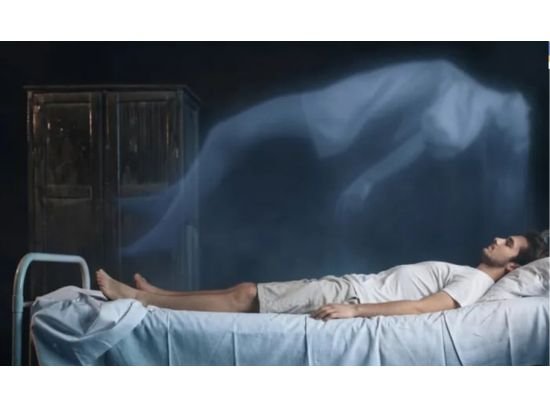
When the Body Refuses to Die: Scientists Reveal a Mysterious ‘Third State’ After Death – A Discovery That Has Shocked the World
In a groundbreaking scientific breakthrough, researchers have revealed that the human body does not entirely “die” when death occurs. Instead, some cells enter a mysterious “third state” — a condition where they are neither fully alive nor fully dead. This extraordinary discovery has shaken the global scientific community.
The research, published in the prestigious journal Nature, challenges long–held beliefs about death and the limits of biological life.
The first part of this discovery came from American scientists working with African clawed frogs (Xenopus laevis). Researchers removed skin cells from dead frog embryos and placed them on a laboratory dish.
Instead of decomposing — as science would normally expect — the cells clustered together and formed small, mobile living structures. These tiny organisms, called Xenobots, measure only 0.5 to 1 millimetre, yet:
They move on their own
They can heal wounds
They can collect loose cells around them
And most shockingly, they can build new Xenobots—essentially reproducing biologically
This behaviour was previously thought impossible for dead cells.
In a second astonishing development, scientists reported similar behaviour in human cells.
Cells taken from the lungs of a deceased person were placed in a controlled lab environment. These cells rearranged themselves into tiny spheres called “Anthrobots”. These Anthrobots behave like micro–organisms:
They swim in water
Help reconnect damaged nerve cells
Trigger regrowth of tissues
All of this happened without any DNA modification. The only change was removing the physical pressures that usually guide the cells inside the human body. In freedom, the cells showed creativity, organisation, and a surprising ability to rebuild themselves.
The “third state” is a newly identified biological phase in which cells:
Do not function as living cells do
Do not behave like dead matter either
Enter a plastic, flexible mode
Attempt to reorganize into a new form of life
This means that after the body dies, many cells continue to operate, adapt, and even innovate.
Scientists believe this state could be a leftover evolutionary ability that helps organisms survive extreme damage.
According to experts like Michael Levin from Tufts University, this discovery goes far beyond stem–cell therapy. Here, cells are not being reprogrammed — they are reprogramming themselves.
Researchers believe:
Future medicine could grow tissues or organs without donors
Transplants may become unnecessary within the next decade
Damaged tissues could repair themselves using Anthrobots
Regeneration therapies could dramatically change human lifespan and healing
This discovery opens the door to a future where death itself may need a new definition.