Saturday, March 29, 2025
Trump’s Three-Point Gaza Plan Faces Test Amid Muslim Nations’ Concerns
Washington | Tuesday, September 23, 2025, 06:52 AM IST
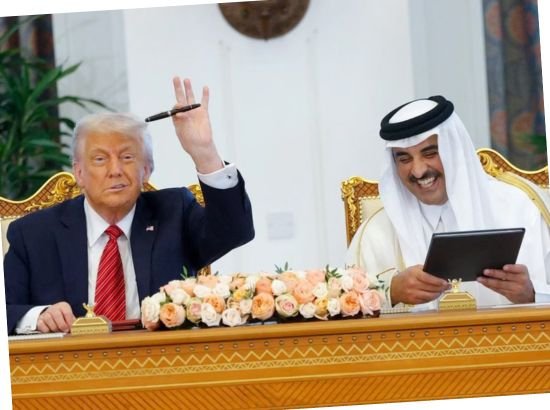
“The snake must be killed, not the stick broken”—that’s how some observers describe the delicate challenge facing U.S. President Donald Trump, as he prepares to present his three-point plan for Gaza to Muslim leaders gathered in New York.
With Israeli airstrikes intensifying and fears of genocide mounting in Gaza, leaders from Saudi Arabia, the UAE, Qatar, Egypt, Jordan, Turkey, Indonesia, and Pakistan are scheduled to meet Trump on Tuesday on the sidelines of the UN General Assembly. The aim: to hear Washington’s proposals for halting the Gaza war and shaping its aftermath.
According to a report by Axios citing U.S. and Arab officials, Trump will outline three central elements:
Release of hostages currently held in Gaza.
Negotiated Israeli withdrawal from the enclave.
Post-war governance of Gaza without any role for Hamas.
This marks Trump’s most concrete proposal yet for ending the conflict.
The U.S. also wants Arab and Muslim nations to support the transition by:
Deploying peacekeeping forces to Gaza after Israel’s withdrawal.
Funding the reconstruction of the enclave.
On Monday, Indonesian President Prabowo Subianto announced his country’s readiness to contribute troops to such a peacekeeping mission.
Trump’s strategy, analysts say, is aimed at both pressuring Israel to leave Gaza and involving Arab states in creating a new political and security structure there.
Meanwhile, Israel is advancing with three divisions of armored and infantry troops toward Gaza City, seeking to tighten its military grip. Yet in New York, France and several European countries have reaffirmed their backing of a two-state solution, directly opposing Israel’s expansionist push under Prime Minister Benjamin Netanyahu, who appears determined to pursue his vision of a “Greater Israel.”
Despite heavy international criticism over civilian suffering and growing diplomatic isolation, Netanyahu has already achieved part of his strategic objectives.
On the diplomatic front, 147 of the UN’s 193 member states have recognized Palestine as an independent nation. In a fresh development, Portugal has formally extended recognition, joining the UK, Canada, and Australia.
Portugal declared that the two-state solution remains “the only path to a just and lasting peace.” Notably, India recognized Palestine in November 1988, establishing full diplomatic relations at that time.