Saturday, March 29, 2025
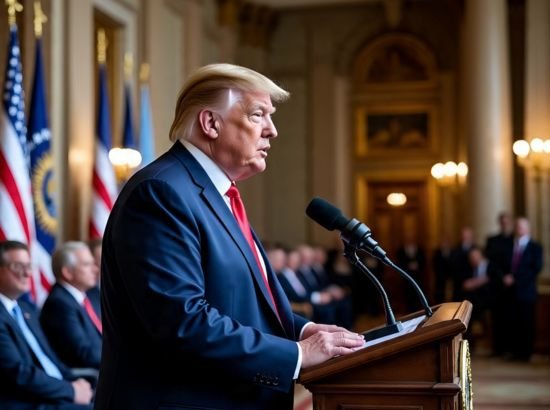
A former senior Pentagon official has launched a sharp attack on US President Donald Trump, arguing that Washington’s diplomatic missteps have unintentionally pushed India and Russia closer together. In a striking remark, the official said that if bringing New Delhi and Moscow nearer was a goal, Trump would actually deserve a Nobel Prize for it.
Speaking to ANI, American scholar and former Pentagon official Michael Rubin said the extraordinary warmth and respect shown to Russian President Vladimir Putin during his recent India visit had little to do with Moscow’s diplomacy—and far more to do with Trump’s actions.
According to Rubin, New Delhi’s embrace of Putin reflects India’s growing discomfort with Trump’s foreign policy, particularly his approach toward Prime Minister Narendra Modi and India’s broader strategic interests.
“I would argue that the way Donald Trump has brought India and Russia together, he actually deserves a Nobel Prize,” Rubin said, in a remark heavy with irony.
Rubin questioned how many of the agreements signed during Putin’s visit would translate into genuine long-term cooperation, and how many were simply a result of India’s frustration with recent US behaviour.
He suggested that Trump’s attitude toward India—both personally toward Prime Minister Modi and institutionally toward Indian interests—has played a major role in reinforcing India’s pivot toward Russia.
Rubin said the developments are being interpreted in the US through two sharply divided lenses.
According to him, Trump supporters see India–Russia closeness as confirmation of Trump’s worldview—an “I told you so” moment.
But for the 65% of Americans who dislike Trump, Rubin said, the situation highlights Trump’s deep diplomatic incompetence.
“To them, all of this looks like the result of Donald Trump’s massive diplomatic failure,” Rubin said.
He added that several of Trump’s foreign policy decisions appear shaped by flattery or questionable incentives from countries such as Pakistan, Turkey, and Qatar, often at the cost of US–India relations.
Rubin claimed that many experts in Washington are stunned by how Trump has undermined the growing strategic partnership between India and the United States.
He argued that instead of acknowledging mistakes, Trump is likely to use India–Russia proximity as a justification for his own foreign policy narrative.
Commenting on Putin’s assurance of continued energy supplies to India, Rubin delivered one of his strongest criticisms of Washington.
He said the US has repeatedly failed to understand India’s energy and strategic realities.
“Indians elected Narendra Modi to represent Indian interests,” Rubin said.
“India is the world’s most populous country, soon to be the third-largest economy, and it needs energy.”
Rubin bluntly stated that America should stop lecturing India about buying Russian energy, especially when the US itself has purchased Russian fuel whenever alternatives were limited.
He posed a direct challenge to Washington:
“If the US doesn’t want India buying Russian fuel, what is it doing to provide India with affordable and reliable alternatives?”
Ending with a sharp remark, Rubin said:
“If we don’t have real options to offer, the best thing to do is stay quiet—because India must prioritise its own security and needs.”
The remarks underline growing unease in American policy circles over the trajectory of US–India relations during the Trump era, and how those choices may have reshaped global alignments in ways Washington never intended.