Saturday, March 29, 2025
On the eve of the highly anticipated U.S. visit by Saudi Arabia’s Crown Prince Mohammed bin Salman, President Donald Trump announced plans to sell F-35 fighter jets to the Gulf nation — a move that has raised eyebrows within his own administration.
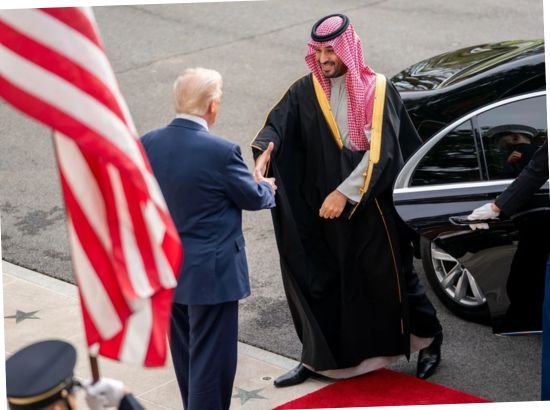
On Tuesday, the White House rolled out an extraordinary welcome for Crown Prince Mohammed bin Salman, as President Trump greeted him with a ceremony that rivaled any official state visit. The grand spectacle featured horses, military bands, and the sounds of trumpets, creating a scene of unmatched splendor.
Although the visit was not categorized as a state visit—since the 89-year-old King Salman remains the official head of Saudi Arabia—Trump’s warm reception sent a clear diplomatic signal of Saudi Arabia’s importance to U.S. interests and his personal respect for the Crown Prince.
A procession of horses escorted the Crown Prince’s limousine up the White House driveway. A military band played in his honor, and as Trump greeted him with a smile on the South Lawn, a formation of fighter jets, including F-35s, performed a dramatic flyover above the White House. The two leaders exchanged a firm handshake, posed for photographs, and then proceeded to the South Portico after a ceremonial salute by U.S. troops.
This marks Crown Prince Mohammed’s first trip to the United States since the 2018 assassination of Washington Post journalist Jamal Khashoggi by Saudi agents — a killing that strained U.S.-Saudi relations for years. American intelligence agencies later concluded that the Crown Prince had approved the operation, an allegation he continues to deny.
Seven years later, much of that tension has eased. Trump now views the 40-year-old royal as a pivotal partner in shaping the future of West Asia, while the Crown Prince seeks to demonstrate his country’s strategic depth and reformist image on the global stage.
While human rights concerns and the Khashoggi issue may not dominate the discussions, substantial attention is expected on the multibillion-dollar arms agreements and Middle East security challenges. Ahead of the visit, Trump confirmed his intention to sell F-35 fighter jets to Saudi Arabia.
However, the decision has sparked internal debate within the Trump administration. Some officials fear the sale could expose advanced U.S. defense technology to China. Others worry it could undermine Israel’s qualitative military edge over its neighbors — particularly crucial at a time when Washington relies heavily on Israeli cooperation for Trump’s proposed Gaza peace plan.
Despite these concerns, the deal highlights Washington’s ongoing strategy to strengthen economic and strategic ties with Riyadh, even as it navigates the complex geopolitical rivalries of the region.