Saturday, March 29, 2025
China Deepens Southeast Asia Influence, Mediates Thailand-Cambodia Border Clash
China is rapidly expanding its influence in Southeast Asia, stepping into disputes where the US once dominated peace efforts. Beijing’s latest mediation comes in the ongoing Thailand-Cambodia border conflict, highlighted by a trilateral meeting on Monday in China’s Yunnan province—located north of the disputed border.
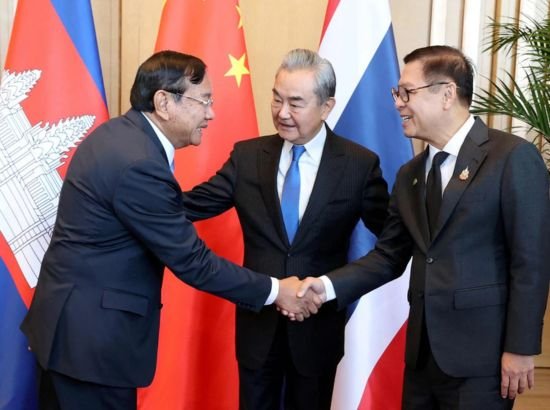
Thailand and Cambodia’s foreign ministers met with their Chinese counterpart Wang Yi in Yunnan, a southwestern province near the Thailand-Cambodia border. The meeting occurred two days after a new ceasefire agreement on December 27, following clashes that killed over 100 people.
Post-meeting, Thai Foreign Minister Sihasak Phuangketkeow told reporters: “We haven’t resolved all issues, but I feel we’re moving in the right direction, and we should maintain this momentum.” He prioritized ensuring a permanent ceasefire and rebuilding trust.
Chinese Foreign Minister Wang Yi called for joint efforts to promote regional peace, stability, and development, stating: “Neither the people of the two countries nor China wants to reignite the flames of war. We must move forward firmly.”
Cambodia’s Foreign Minister Prak Sokhonn expressed confidence that the ceasefire would hold and create an environment to restart agreed dispute-resolution mechanisms. “We don’t want to go back to the past—nobody wants to see this conflict again. It’s crucial that the ceasefire becomes permanent and is respected.”
State media Xinhua reported all three sides agreed to sustain the ceasefire without changes, maintain dialogue, and gradually restore ties between the Southeast Asian neighbors. Priorities include resuming normal exchanges, with China ready to provide immediate humanitarian aid to displaced residents.
The two nations signed an initial ceasefire in July under Malaysian mediation and US President Donald Trump’s pressure, who threatened trade privileges. An October agreement followed, but propaganda wars and minor border violence persisted, escalating into full-scale fighting in early December.
Saturday’s deal requires Thailand to return 18 captured Cambodian soldiers within 72 hours—a key Cambodian demand. Both sides were urged to comply with international agreements against laying landmines, a major Thai concern. Sihasak added: “If no incidents occur in 72 hours, Thailand will begin releasing the 18 Cambodian soldiers. We’ll also request Cambodia facilitate the return of remaining Thai civilians stranded in border city Poipet.”