Saturday, March 29, 2025
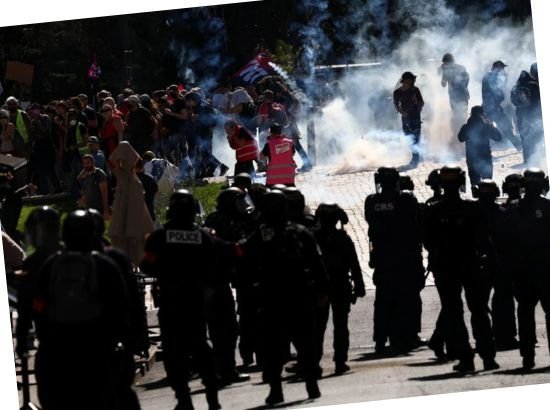
800,000 Protesters Take to the Streets in France, Unrest Bigger Than Nepal: Why Is the Public Furious?
France witnessed another massive wave of protests on Thursday, just days after the “Block Everything” demonstrations shook the country last week. According to the Interior Ministry, nearly 800,000 people joined nationwide strikes and rallies, demanding higher wages, opposing budget cuts, and calling for President Emmanuel Macron’s resignation.
The scale of the protests has paralyzed the country. Around one-third of teachers went on strike, 9 out of 10 pharmacies shut their doors, and the Paris metro system faced severe disruptions. Farmers, hospital staff, pharmacists, railway workers, and students all joined hands, bringing daily life to a standstill.
Authorities deployed 80,000 police officers across France to control the situation. Security forces used drones, armored vehicles, and water cannons to manage crowds, while over 20 people were detained in different locations.
The protests erupted despite the recent appointment of new Prime Minister Sébastien Lecornu, who had promised to ease the ongoing political crisis. Although he rolled back plans to cancel two public holidays and abolish lifetime allowances for ex-prime ministers, discontent persists. Anger is mainly directed at former Prime Minister François Bayrou’s €44 billion budget proposal, which critics say disproportionately cuts spending on essential sectors.
For President Macron, the situation is dire. Lecornu is the fifth prime minister in two years and the fourth in less than twelve months, reflecting deep political instability. Budget disputes have historically been flashpoints in French politics, determining which sectors gain or lose funding—and often sparking fierce clashes between government and opposition.
With mounting unrest, Macron’s presidency faces one of its toughest tests yet.